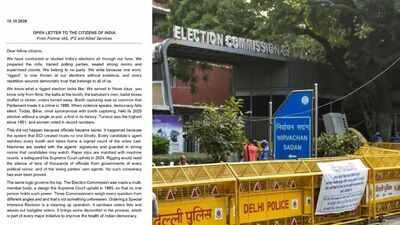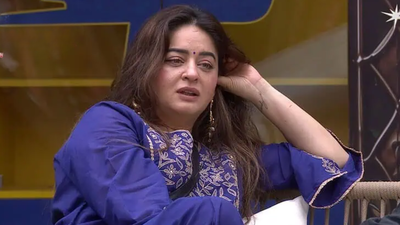











NEW DELHI: By 2.30pm on Sunday, a crowd had begun to gather near RK Ashram Marg Metro station. Neha Bora had called for the agitation to go on, and her supporters answered. So did the police, in large numbers.Within minutes, the gathering turned into a chase. Bora broke into a run towards Connaught Place, and protesters streamed after her, past the barricades. At 2.51pm she announced on social media that they had made it to CP. Police caught up soon after, and by about 3pm she was in custody. Others were carried to waiting buses, struggling as they went.The aim was to reach Jantar Mantar and press for the resignation of chief election commissioner Gyanesh Kumar. The woman leading the dash is the 29-year-old president of the All India Students’ Association (AISA), who had ended a 23-day hunger strike at the same spot only recently.
The bus, in her telling
After her detention, Bora posted a video on X describing the police bus as a vehicle with four cramped cells and no room to breathe. She alleged that women were packed into a small compartment and that male protesters were abused and kicked. Police have not responded to these claims in the reports available.
Many Jantar Mantars
The run was the second act of a defiant weekend. After Saturday’s detentions, she told supporters that another part of Delhi would become Jantar Mantar the next day. She had also asked those who couldn’t reach the protest site to regroup near Dilli Haat. They gathered in the INA area, where police detained her and others.
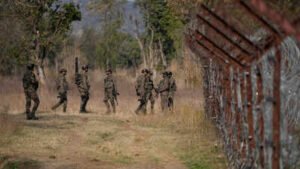
A soldier’s daughter
Neha grew up in Khatima in Uttarakhand, in a family that moved from city to city with her father’s Army postings. She has lived in Delhi for nearly 12 years, but the hills remain her reference point. She pushes back on the stereotype of the soft-spoken hill woman, saying that strength is what has kept her going.
When home disagrees
Her father, who is still in the Army, and the rest of the family do not share her politics and are uneasy about her activism. She says the difference has not shaken her convictions.
Theatre first, politics later
Neha’s activism did not begin with slogans. At Delhi University, she acted in plays on social issues, and that stage work widened her worldview. She later joined a group that took such causes to the streets. She calls the journey “an organic progression”, something that was never planned.
Shaped by anti-CAA stir
The 2019 protests against the Citizenship (Amendment) Act were a turning point. She says being on the ground changed many who were there, her included.
The scholar
Bora is a PhD scholar at Jawaharlal Nehru University, working in theatre and performance studies. It is a fitting field for someone who has spent years learning how to hold an audience, whether in a hall or at a barricade.
The fast
She was one of three JNU scholars who fasted with activist Sonam Wangchuk at Jantar Mantar. After 23 days without food, she was left weak, though her fever had subsided. She spoke to TOI about her life and politics on Thursday, on her way back to the protest site.
The grievance
Neha Bora traces the agitation to policy rather than any single event. She says the opposition to the National Education Policy, 2020 and to the centralisation of examinations has been building for years, well before this month’s protests.