




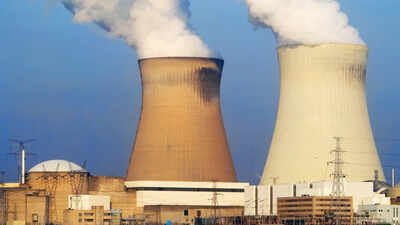


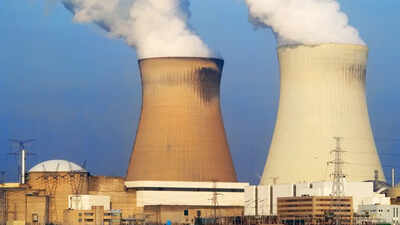
India is looking to scale up its nuclear power capacity to 100 gigawatts (GW) by 2047, with the entry of private players expected to bring in Rs 7.5 lakh crore in investment and contribute 30 GW to the country’s ambitious expansion target.The move marks a major push to expand nuclear energy as India seeks to meet rising electricity demand, strengthen energy security and diversify its power mix.According to news agency PTI, Atomic Energy Commission chairman A K Mohanty said the private sector could contribute 30 GW to the target, while the opening of the nuclear power sector to private players is expected to attract Rs 7.5 lakh crore in investment.He also said India holds 25 per cent of global thorium reserves, which could support the second and third stages of the country’s nuclear power programme.India currently has an installed nuclear power capacity of 8.78 gigawatts (GW), generated by 24 reactors, according to the Department of Atomic Energy. The government aims to increase this capacity to around 22 GW by 2031-32, before scaling it up further to 100 GW by 2047 as part of its long-term nuclear energy expansion plan.The government plans to raise the nuclear power capacity of Nuclear Power Corporation of India Limited (NPCIL), a public-sector company responsible for operating nuclear power plants in India, to 54 GW by 2047.Other public-sector companies, state governments and private players are expected to contribute the remaining 46 GW. The expansion aims to strengthen India’s energy security and provide reliable, low-carbon electricity.According to data released by the department of atomic energy, it has as identified around 439,800 tonnes of in-situ uranium oxide resources across Andhra Pradesh, Telangana, Jharkhand, Meghalaya, Rajasthan, Karnataka, Chhattisgarh, Uttar Pradesh, Uttarakhand, Himachal Pradesh and Maharashtra.The department also reported 1.18 million tonnes of thorium oxide resources contained in 13.15 million tonnes of monazite, a mineral found in coastal beach sands, red sands and inland deposits across several states.The department of atomic energy says India is pursuing a three-stage nuclear power programme to make optimal use of its limited uranium resources and harness thorium for long-term energy security. Thorium must first be converted into fissile uranium-233 before it can be used as nuclear fuel.